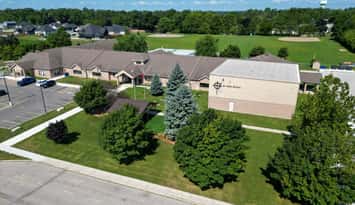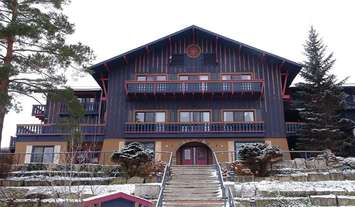
The Bruce Trail Conservancy is pressing forward with an ambitious plan in the Beaver Valley that will see the former Talisman Mountain Resort buildings demolished and more than 130 acresof land restored to a more natural state.
In a statement, the organization says the decision will "permanently eliminate the threat of development" on the property and establish the Talisman Forest Nature Reserve, a project centred on reforestation, habitat restoration, and public access along the Bruce Trail.
The site, which has been the focus of development pressure for years since the resort closed in 2011, was purchased by the conservancy in late 2025. Since then, it has been under review for long-term conservation planning.
Speaking in an interview with CKNXNewsToday.ca, Bruce Trail Conservancy CEO Michael McDonald acknowledged the decision to demolish the remaining structures may come as a surprise to some.
"This really is a great win for nature," McDonald said. "There’s so few wins for nature."
He said there is some understandable emotion attached to the former resort, but the buildings themselves have deteriorated significantly over time.
"I understand that there could be some sadness and nostalgia around saying goodbye to the buildings," he said. "But the reality is that the buildings are in pretty rough shape."
McDonald said the organization did explore other options for the site, including potential partnerships and reuse concepts, but ultimately concluded removal was the best path forward.
"We explored different possibilities for potential future uses," he said. "We talked to different partners about what was possible there, but in the end we decided that the best place for this place would be to let nature live on forever, and have the community experience it in a new way."
He also confirmed that the decision effectively ends years of speculation about redevelopment on the property.
"I think that’s fair to say," McDonald said when asked if the move closes the door on future development discussions. "But I think I see this as sort of the next exciting chapter for what’s possible on this site."
One of the most significant ecological opportunities tied to the project is the possibility of "daylighting" a buried stream that runs beneath the former resort buildings.
McDonald said early assessments suggest the watercourse could be brought back to the surface as part of the restoration work.
"It’s very clear to us that in looking at some of the hydrology of the site before it was developed, there very much looks like there was a stream under these buildings," he said. "It’s just a great opportunity to daylight it and return nature back to its natural core."
He said that kind of restoration work is at the heart of what the conservancy is trying to achieve with the project.
"We’re excited that the Bruce Trail Conservancy is an expert in restoration," McDonald said. "This is an incredible restoration project happening all along the Niagara Escarpment, but this will be a great one and exciting for the community."
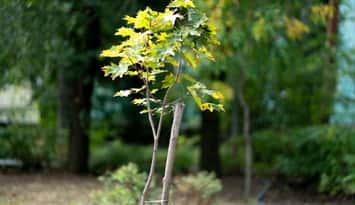
The conservancy is also planning major ecological work across the former ski hills, including large-scale tree planting aimed at closing a long-standing gap in forest cover along the Escarpment.
McDonald said the broader vision is to "rewild" the property over time, returning it to something closer to its natural ecological state.
"Rewilding is a term where you take a developed site and you return it back to nature," he said. "It takes a little bit of time for that to happen, but imagine a place where maybe it was a parking lot, but it’s going to one day be an intact forest ecosystem where birds and species that live along the Niagara Escarpment can thrive in great numbers."
He added that southern Ontario has limited opportunities for projects of this scale, making the Talisman site especially significant.
"There’s not a lot of opportunities to rewild in southern Ontario," McDonald said. "That’s what’s exciting about this project, that we can actually replant trees and reintroduce that ecosystem that was changed when the development happened over 60 years ago."
To support the work, the Bruce Trail Conservancy has launched a $7.5 million fundraising campaign covering land protection, demolition, and long-term restoration. It says millions have already been raised through donors and government-supported land trust partnerships.
McDonald said the goal goes beyond simply removing old structures.
He said the project is about changing the trajectory of the land entirely, turning a long-debated development site into a protected natural space that will evolve for decades to come.
"We’re rewilding it and making it a place where nature can thrive," he said.
The conservancy says ecological studies and planning work are already underway, with restoration efforts expected to unfold in phases over several years.